Thermal management

Die Cast Aluminum Heat Sinks

Custom aluminum heat sinks with cast fins, mounting bosses and machined thermal interfaces. Share your heat load, airflow, drawing and production volume.

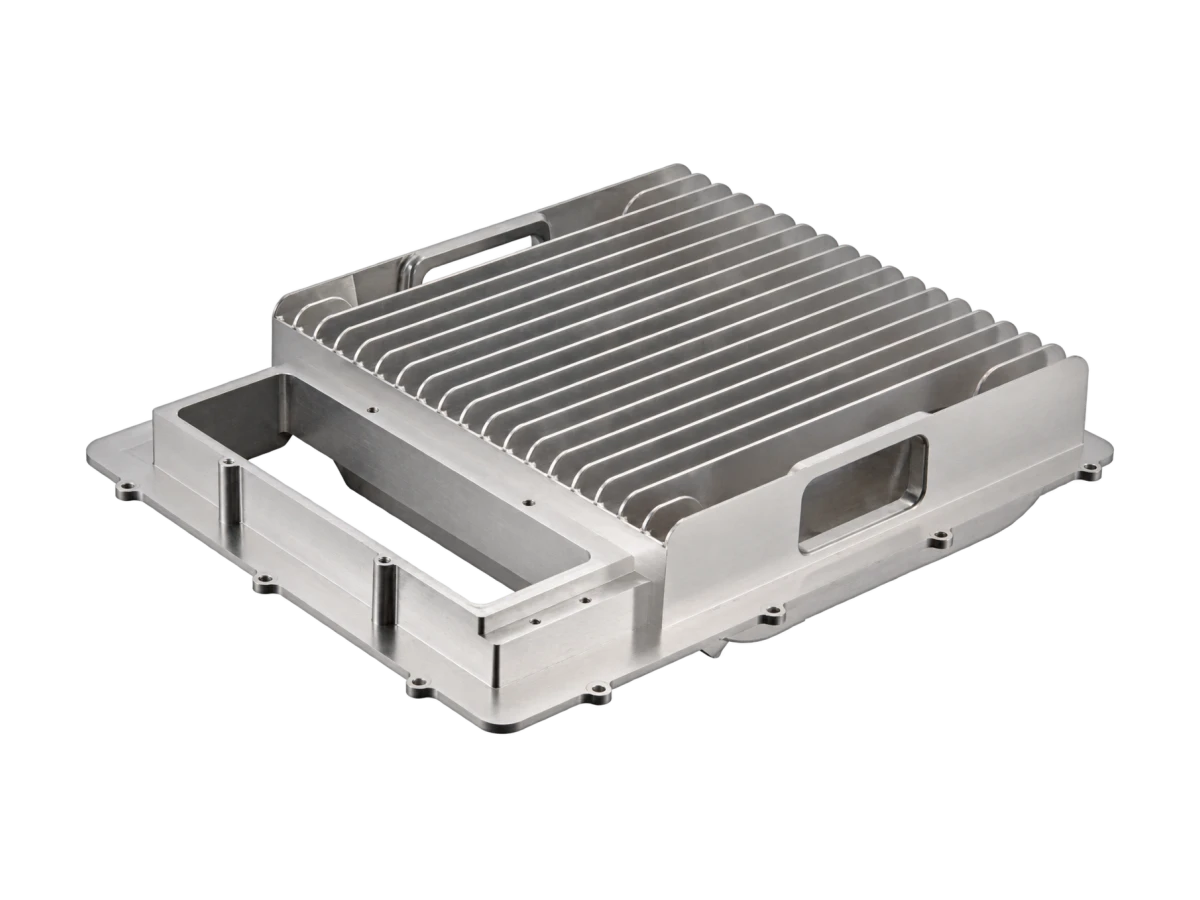
Aluminum heat sink housing with integral cooling fins and mounting holes
Component requirements

Product specifications for your RFQ

These are configuration and review inputs. Final dimensions, material, finish and acceptance criteria follow the agreed drawing.

Product forms
Finned housings, heat spreaders and integrated cooling bodies
Material review
Casting alloy selected for thermal and manufacturing requirements
Critical interfaces
Contact-face flatness, mounting datums and thread locations
Finish planning
Mask thermal contact faces and electrical contact zones
Validation inputs
Heat load, airflow, orientation and allowable temperatures
Quotation inputs
3D model, 2D drawing, annual demand and test requirements
Design & Application Guide

Integrate cooling geometry into the component

A die cast aluminum heat sink can combine fins, mounting points, cable features and an enclosure wall in one component. This route is useful when a repeated design needs three-dimensional geometry that would be difficult to make as a simple extrusion. Applications include LED equipment, power electronics, controllers and industrial drives.

The manufacturing review starts with the thermal path: where heat enters the part, how it spreads through the base and where it leaves through the fins. A larger fin count alone does not establish better cooling. Fin spacing, draft, airflow direction, base thickness and access for cleaning all affect the usable geometry.

Select the alloy around the thermal requirement

Common casting alloys can offer a useful balance of castability, strength and finishing behavior, but they do not share the conductivity of pure aluminum or every wrought alloy. Identify the required material standard and thermal assumptions before tool design. Where conductivity dominates, compare a suitable casting alloy with an extrusion or machined alternative.

Casting feasibility depends on fin height, section transitions, fill distance, venting and ejection. The tool review should identify potential trapped air and difficult-to-fill regions rather than relying on a universal minimum fin thickness.

Machine and protect the contact surfaces

The contact face may need secondary CNC machining to control flatness, roughness and its relationship to mounting holes. Define the interface material, clamping arrangement and inspection datum. Protect this face during handling so that scratches and coating buildup do not change the intended contact.

Coatings can change surface behavior and dimensions. Specify finish thickness and masking around thermal pads, threads and grounding areas. Appearance and corrosion requirements should be reviewed separately from the thermal calculation.

Validate in the intended assembly

Provide heat dissipation, ambient temperature, airflow, installation orientation and allowable component temperatures with the RFQ. Agree which dimensions need inspection and which thermal checks belong to the complete equipment. Part dimensions and material records support validation; a casting inspection alone does not demonstrate the final cooling performance.

Manufacturing Route

From your drawing to an agreed component route

  1. 01

    Review the thermal interface

    Identify heat input, airflow and mounting conditions.

  2. 02

    Develop the casting geometry

    Review fins, draft, fill, venting and ejection.

  3. 03

    Machine the functional faces

    Control contact faces, threads and mounting datums.

  4. 04

    Inspect and protect

    Check agreed features and protect thermal contact areas.

Product FAQ

Questions before you quote

Can fins and mounting bosses be cast together?

They can be reviewed as one casting. Fin spacing, draft, fill distance, ejection and machining access determine the practical design.

Is a die cast heat sink always better than an extrusion?

The choice depends on geometry, thermal requirements, volume and tooling cost. Extrusions suit constant sections; die casting can integrate more complex mounting and enclosure features.

Can the thermal contact face be machined?

Specify flatness, roughness, datums and mounting loads on the drawing so that the machining and inspection route can be quoted.

Ready for a manufacturing review?

Request a Quote

Submit drawings, 3D models and specifications for review. Include material, quantity, tolerances and finish requirements.

Request a Component Quote →

Necessary storage supports secure forms, website sessions and your privacy choice. Optional analytics helps ZAODA understand visits, page use and enquiry interactions. Website Analytics is enabled by default. Uncheck it and save your preferences to stop analytics.

Your choice is saved for 180 days. We ask again when it expires or these settings change.

Necessary

Always active

These cookies keep the website and enquiry forms working securely and remember your privacy choice. They also support administrator authentication.

Cookies and browser storage

Necessary: zaoda-session and XSRF-TOKEN cookies support sessions and form security and last for 2 hours, renewed by website activity. The zaoda:consent local storage record remembers this privacy choice until its expiry. Optional analytics: zaoda:analytics:visitor uses local storage; zaoda:analytics:session and zaoda:analytics:last-activity use session storage. A new analytics session begins after 30 minutes of inactivity. These identifiers are removed when analytics is declined, consent expires or the consent version changes. Session storage normally ends with the browser tab; browser settings can also clear site data.

Cookie Policy
Upload Drawings · Request a Quote ↗