
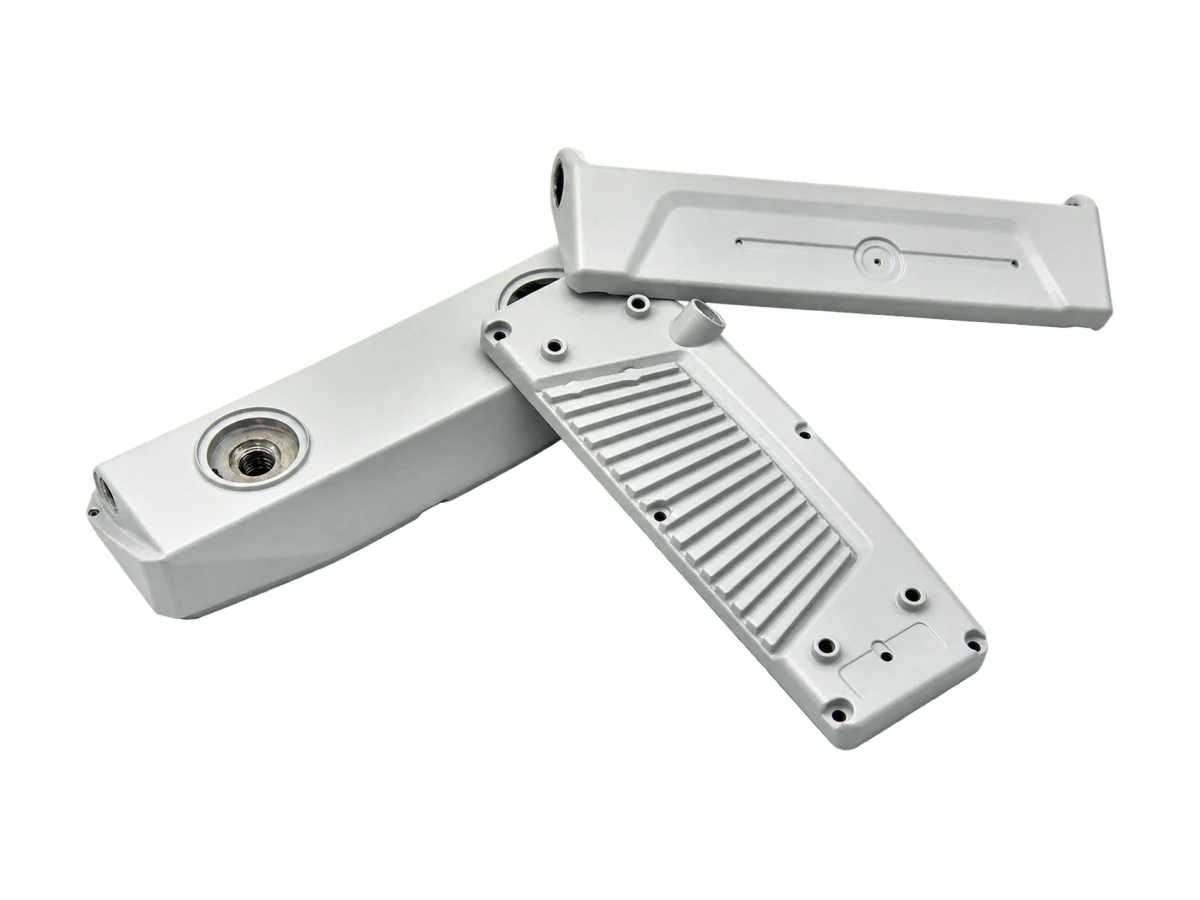
Housing components for LED and solar street lights
An LED light housing supports the light module, protects internal components and provides mounting interfaces. Die casting can combine external cooling fins, driver compartments, fastener bosses and lens supports in one repeatable aluminum body. Separate covers can provide access for maintenance.
For solar street lighting, define whether the battery and controller sit inside the lamp body or in separate enclosures. Integrated and split layouts create different loads, service access requirements and thermal conditions. The metal housing scope should be separated from the solar panel, battery, optics and electrical system in the bill of materials.
Design the sealing and installation interfaces together
A gasket groove needs a controlled relationship to the cover, screw pattern and sealing land. Specify groove geometry, mating-part information and flatness requirements before quotation. Parting lines, flash and ejector marks should be kept away from the sealing interface wherever the tool design permits.
Cable entries, pressure-equalization features and lens retention also affect the completed enclosure. For pole mounts and brackets, provide the assembly geometry, tightening requirements and loading conditions so that the casting and machining plan can address the actual interfaces.
Plan cooling and coating without covering critical surfaces
The LED contact region, driver pocket and airflow around the lamp body need separate review. Define the heat input and installation orientation; the housing outline alone cannot establish operating temperature. Local machining may be needed at mounting pads or sealing lands.
For outdoor use, agree the coating system, pretreatment, thickness, color reference and cosmetic acceptance zones. Identify masking for threads, electrical contacts and gasket faces. Trial components should be checked after coating because finish buildup can affect cover fit and fastener engagement.
Agree checks at component and luminaire level
Dimensional inspection can check mounting points, gasket geometry and lens interfaces. Ingress protection, electrical safety and thermal performance require the relevant complete-assembly tests under defined conditions. Send the intended requirements and responsibility for those tests with the drawing. A bare die cast housing does not establish an IP rating for the finished light.