
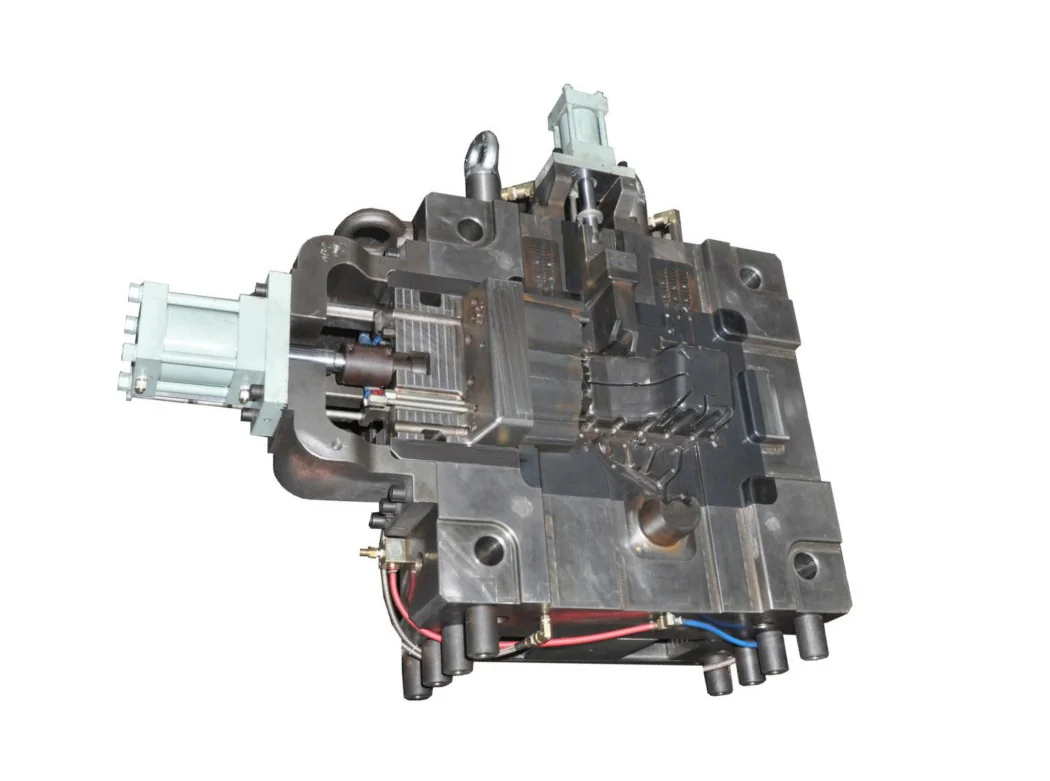
The die casting cost break-even quantity is the demand at which two defined production routes have equal total cost. It is a scenario calculation, not a universal minimum order quantity. Use accepted finished parts and the same delivery boundary for both alternatives.
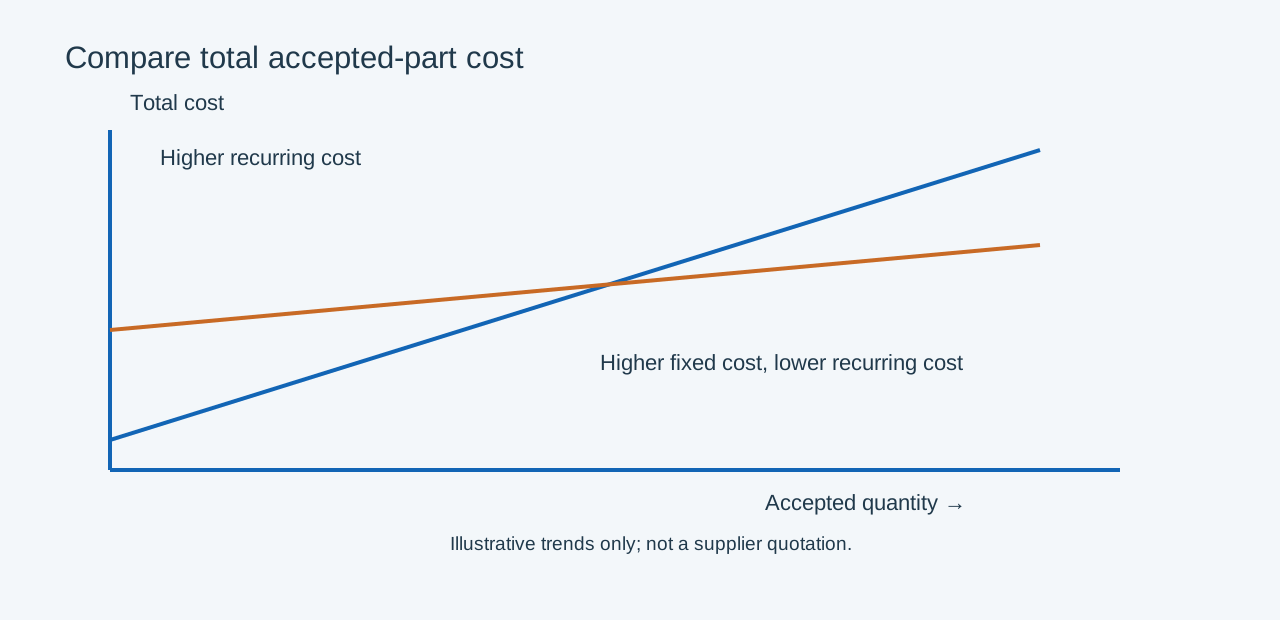
Write the cost model in comparable terms
For route A, let total cost be F_A + N × v_A. For route B, use F_B + N × v_B. Fixed cost includes route-specific tooling, fixtures and validation. Variable cost covers the agreed finished scope per accepted unit. If B has a higher fixed cost but a lower variable cost, the crossing is:
N = (F_B − F_A) / (v_A − v_B)
The equation requires a positive recurring saving. If that saving is zero or negative while B also costs more upfront, increasing volume does not create a crossing in this simple model.
Work an explicit example
| Assumed input | Machined route A | Cast and machined route B |
|---|---|---|
| Fixed cost | $3,000 | $33,000 |
| Cost per accepted part | $28 | $13 |
| Total at 1,000 parts | $31,000 | $46,000 |
| Total at 2,000 parts | $59,000 | $59,000 |
| Total at 5,000 parts | $143,000 | $98,000 |
The crossing is 2,000 accepted parts. All figures are invented to explain the model and are not ZAODA prices. Tooling may need payment before the savings appear, so equal lifetime cost is different from equal cash demand this quarter.
Test the assumptions that could move the result
If route B's variable cost rises from $13 to $18, the same fixed-cost gap requires 3,000 parts to recover. If only 1,500 parts sell before a redesign, the original 2,000-part crossing never occurs. Add inventory, financing, maintenance, freight and disposal when they differ materially.
Yield must use the same boundary. A price per raw casting is not comparable with a price per inspected, coated part. If cost is built from inputs and yield, account for where rejects occur and which costs have already been incurred.
Ask suppliers to identify fixed and recurring items separately, then run low, expected and high demand cases. Keep prototype and production qualification costs visible. Use the result to choose a route with understood exposure, rather than turning one calculation into a guaranteed annual-volume rule.
Related engineering decisions
- How to Compare Die Casting Quotes Fairly
- Die Casting Minimum Order Quantity: What Determines It?
- Related manufacturing service
- Read the broader engineering guide