
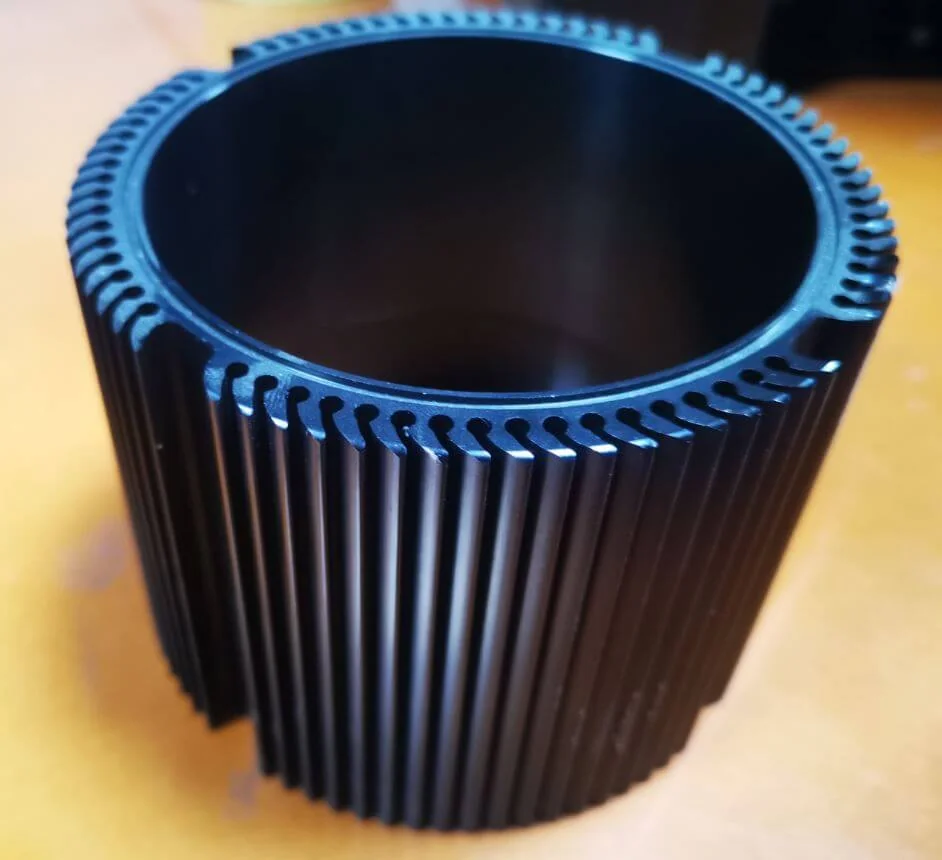
Choose between die cast and extruded heat sinks using thermal requirements, geometric freedom and the complete manufacturing cost. Extrusion favors a repeated cross-section; die casting can integrate three-dimensional bosses, mounting features and housing geometry. Neither route establishes a thermal rating by itself.
Compare geometry and alloy on the same basis
| Requirement | Extruded route | Die-cast route |
|---|---|---|
| Constant profile | Often a natural fit | May add unnecessary tool complexity |
| Transverse bosses or pockets | Additional machining or assembly | Potentially integrated in the casting |
| Material properties | Use the specified extrusion grade and temper | Use the specified casting grade and condition |
| Contact surfaces | Define cut and machined condition | Define post-cast machining and stock |
| Revision exposure | Profile die and downstream setup changes | Casting-tool and downstream changes |
Do not compare a pure-aluminum conductivity figure with a casting grade and label the result a process comparison. Likewise, higher material conductivity does not compensate automatically for poor airflow or a bad thermal interface.
Evaluate the installed thermal path
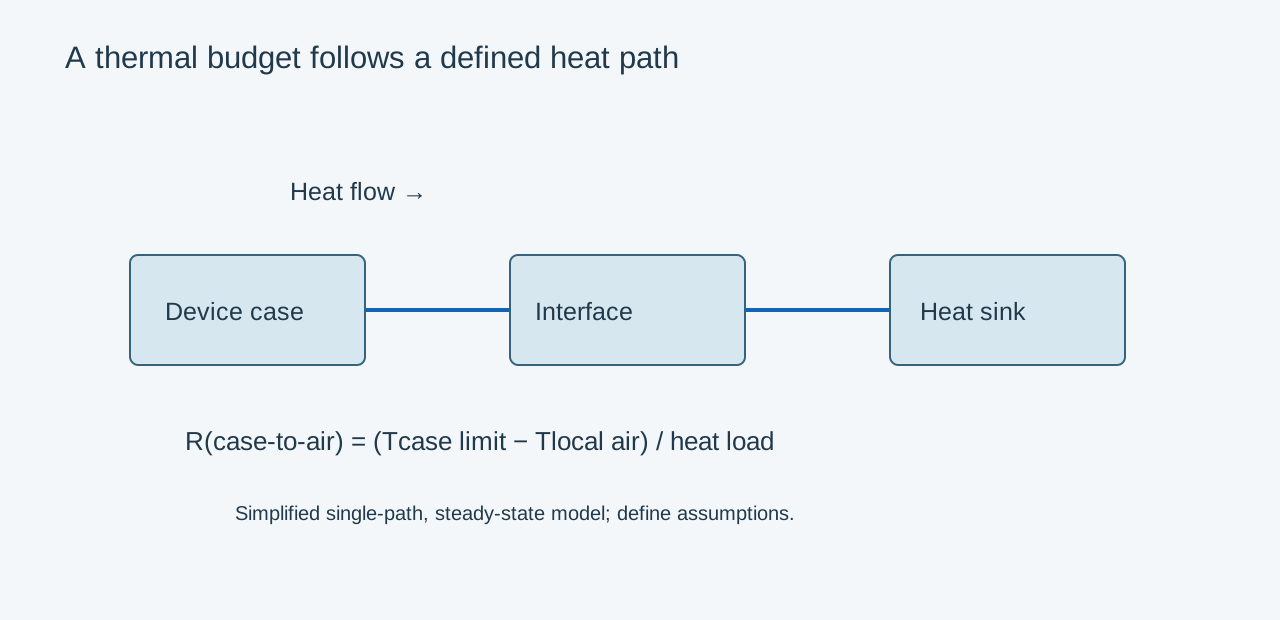
Specify heat load, local cooling-air temperature, orientation, available airflow and maximum permitted source temperature. Include base spreading, interface material and clamp arrangement. Compare the complete proposals under equivalent boundary conditions.
For an illustrative housing that also acts as a heat sink, casting may eliminate several brackets and fasteners. That assembly saving belongs in the economic comparison. It does not prove the casting's fins cool better than an extrusion. Test that question separately.
Compare finished cost and validation
Include tooling, cutoff, machining, coating, assembly, inspection and expected demand. If a profile needs extensive pocket milling or cross-drilling, its raw-stock price hides much of the finished cost. If the design is a simple constant section, a complex casting tool may offer little advantage.
Use prototypes to check packaging and mounting, then validate production-intent thermal samples with the actual finish and interface. A black surface, a dense fin pattern or a large overall area is not sufficient evidence of performance. Provide the thermal budget and assembly model with the RFQ so the route recommendation responds to the same operating conditions.
Related engineering decisions
- Die Cast Heat Sink Design: From Heat Load to Geometry
- Die Casting Design for LED Light Housings
- Related manufacturing service
- Read the broader engineering guide