

An LED light housing must align the optical assembly, manage heat, support mounting and protect the electrical system. Review these interfaces together before optimizing the casting for appearance or weight.
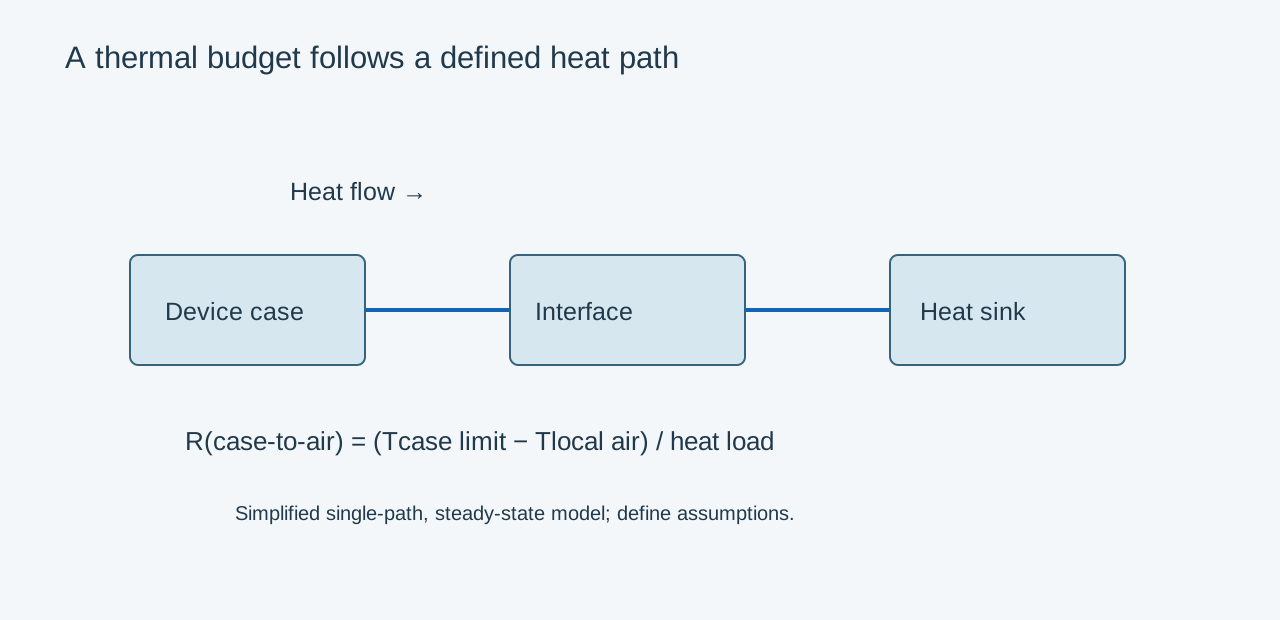
Follow heat from the LED board to the air
Define the electrical input and actual heat to dissipate rather than treating rated lamp power as a complete thermal specification. Use the LED and driver manufacturers' temperature limits and measurement guidance. The local air around an installed fixture can differ from nominal outdoor ambient.
| Interface | Design information | Validation |
|---|---|---|
| LED board contact | Pad geometry, interface and clamp load | Representative temperature test |
| Optics | Locators, clearances and alignment | Optical assembly trial |
| Lens seal | Gasket, groove and compression control | Defined assembled ingress test |
| Mount | Load path and installation adjustment | Relevant mechanical evaluation |
| Driver compartment | Heat, wiring and access | Complete operating assembly |
Design the casting around those interfaces
Fins need adequate flow and release during manufacture and useful airflow in service. Keep the machined thermal contact pad explicit. Avoid heavy intersections where mounting bosses meet thin fin bases without a casting review. Place parting and ejector witnesses away from sensitive sealing and optical locating surfaces where feasible.
Coating boundaries should protect thermal pads, grounding contacts and fits as required. If the final pad is coated, include that layer in the interface assessment. Do not assume a general finish callout leaves the contact unchanged.
Validate the luminaire assembly
For an illustrative street-light housing, a bare casting on a bench may cool well while the installed lens and mounting orientation change air movement. Use the intended assembly, heat sources and installation conditions in qualification. Keep thermal, ingress, electrical and mechanical evaluations within their respective defined scopes.
A component drawing or casting leak test does not by itself certify a finished luminaire. Specify the applicable product requirements and responsibility for testing rather than inventing a safety or ingress rating from the housing material.
Send the LED-board layout, driver envelope, mounting model, seal section and finish map for manufacturing review. Those inputs help identify which surfaces need machining, which details can remain as-cast and what the initial production samples must demonstrate.
Related engineering decisions
- Die Cast Heat Sink Design: From Heat Load to Geometry
- Die Cast Enclosure Design: A Practical Engineering Guide
- Related manufacturing service
- Read the broader engineering guide