
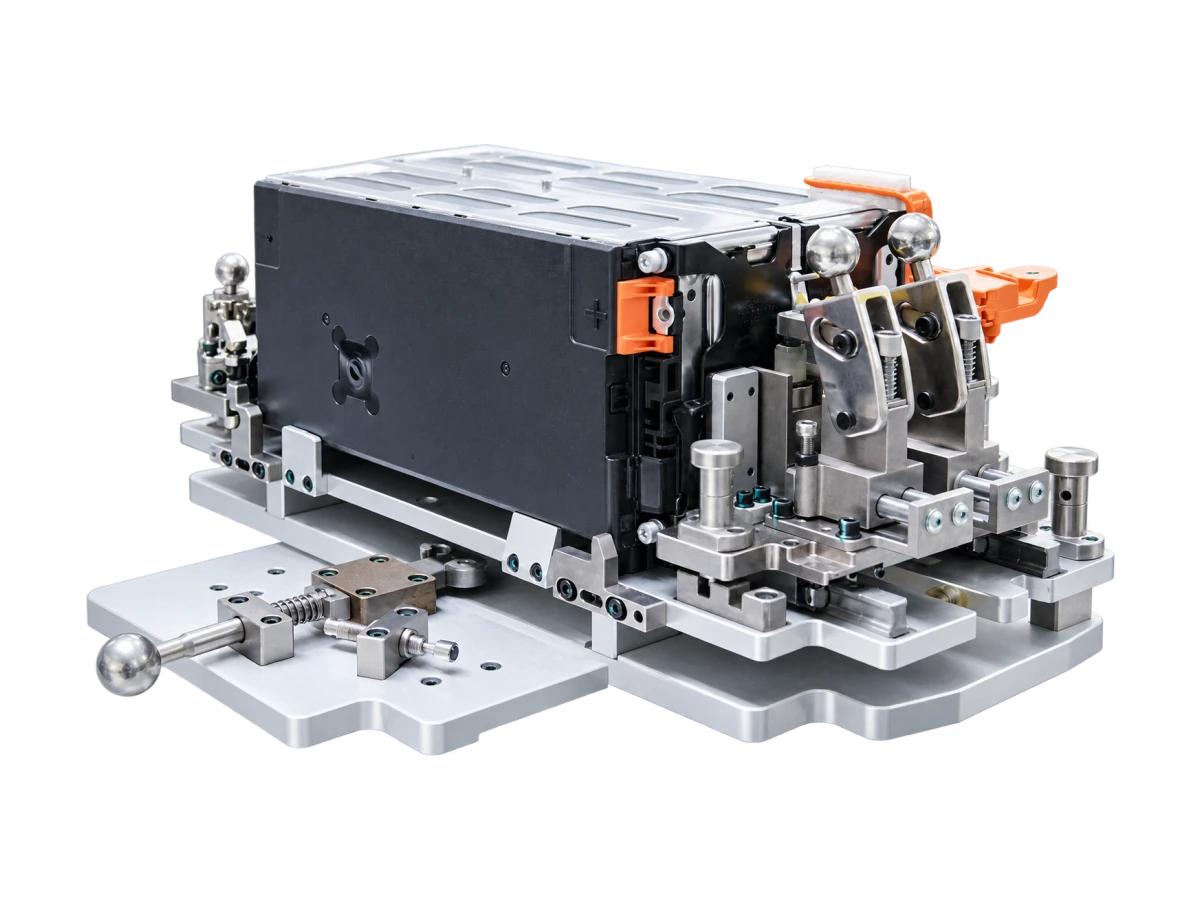
Define the battery housing component before selecting a process
An EV battery housing project can include a tray, module enclosure, cover, bracket or interface component. These parts differ substantially in size, structural duty, sealing requirements and production route. This page focuses on individual custom components whose geometry and manufacturing fit can be reviewed from a controlled drawing.
Die casting can be considered for repeatable shapes with integrated bosses, ribs and mounting interfaces. Large trays and complete underbody structures may require a different route or specialized equipment. The phrase EV battery housing does not imply that every pack size is suitable for the same die casting cell.
Review sealing lands and attachment points
Show the mating cover, gasket arrangement, fastener pattern and connector interfaces in the RFQ. These features establish the dimensions that need control after casting and finishing. Machining may be needed at gasket lands, locating surfaces and threaded interfaces.
If leak testing is required, define the test medium, pressure, stabilization conditions, measurement method and acceptance limit. Identify whether the test applies to an individual component, a subassembly or the complete pack. A dimensional check alone cannot establish leakage performance.
Connect material and finish to the service environment
Provide the alloy standard, operating conditions, exposure to road contaminants and any interfaces with dissimilar materials. These inputs guide discussion of finish, masking, drainage and corrosion control. Joining, adhesives and sealing materials need their own compatibility review.
Electrical isolation and grounding requirements must be identified at the assembly level. A coating should not be assumed to provide a certified insulation function. Specify which surfaces are contact lands, sealing regions, cosmetic zones or protected interfaces.
Establish component acceptance and pack validation separately
The component control plan can address dimensions, traceability, material documentation and agreed tests. Crash behavior, thermal propagation, pack integrity and vehicle approval require validation of the relevant system. Send the customer specification and required documentation so that responsibilities are explicit before tooling starts.
For an initial review, provide the component envelope, weight estimate, model, drawing, expected volume and mating-part information. These inputs allow the team to assess the proposed casting route before committing to a tool layout.