
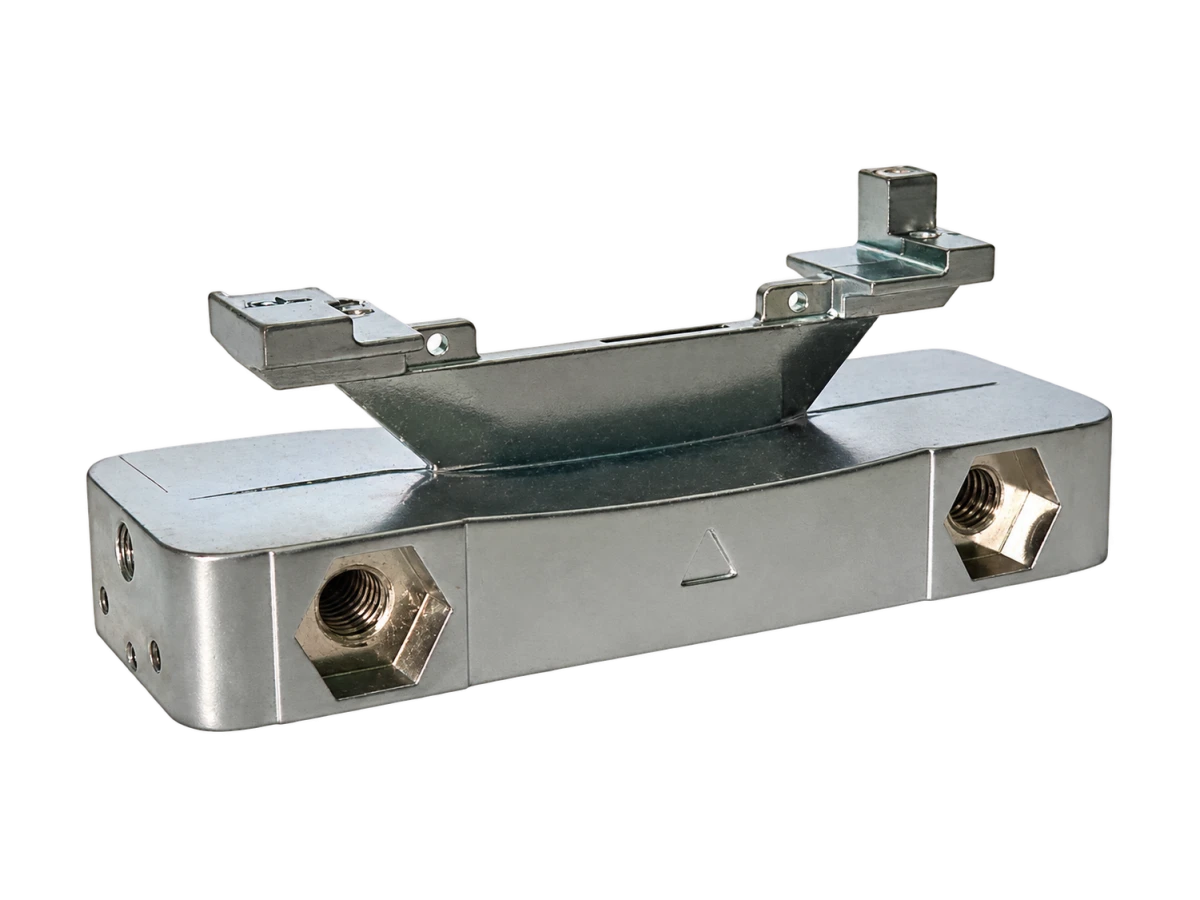
Combine fine detail with functional attachment features
Zinc die cast hardware includes handles, lock bodies, small brackets, fittings and decorative covers. The casting can integrate attachment points and surface details that would otherwise require several separate operations. The product review should start with how the part is held, loaded, fitted and seen by the user.
Provide the mating component and fastening arrangement, particularly where a handle, latch or bracket transmits repeated loads. Cosmetic appearance alone is not enough to select the alloy, wall sections or attachment method.
Specify the Zamak grade and service conditions
Zamak 3 and Zamak 5 are common grades to consider for zinc die casting. Select the designation against the required balance of mechanical behavior, detail, finish and service conditions, and specify the governing material standard. They should not be substituted without reviewing the effect on the component requirements.
Temperature and sustained load can matter for zinc alloy components. Identify the expected service environment and loading duration so that the design review can address long-term dimensional behavior. Casting feasibility should be checked alongside the functional requirements.
Put cosmetic zones into the tooling and finishing plan
Mark primary show faces, allowed parting-line locations, ejector marks and surfaces that will be hidden in assembly. Polishing and surface preparation can change edges and small details. Define an approved reference sample and practical acceptance conditions rather than relying on a finish name alone.
Plating or coating adds material to the surface and can change mating fit, threads and sliding clearances. The drawing should identify coating allowances and masking. Confirm the finish stack, color, gloss and corrosion test requirements with the proposed finishing route.
Check both appearance and assembly function
The inspection plan should cover attachment geometry, hole locations, threads, fit and agreed mechanical checks. Visual inspection needs defined lighting, viewing conditions and cosmetic zones. Packaging should keep finished faces separated so that movement in transit does not mark them.
For quotation, send a drawing, finish specification, mating-part details and expected order quantities. If a reference part is available, use it to explain appearance and fit while keeping the controlled drawing as the basis for acceptance.