

Turn an alloy name into a usable material specification
A380, ADC12 and Zamak 3 identify alloy references, but a production order also needs the governing specification, material condition and acceptance evidence. ZAODA reviews the specified aluminum or zinc grade with the part geometry, machining, finish and intended function. Grade availability and the proposed production route are confirmed during quotation.
This guide focuses on individual grades, material records and substitution decisions. Use the separate casting alloy family comparison when the choice between aluminum, zinc, magnesium and copper alloy is still open. For a drawing that already specifies aluminum or zinc, start with the requirements below.
Compare common aluminum die casting grades
An aluminum grade comparison should answer a manufacturing or functional question: how the part fills, which faces are machined, what finish is required, and what the component must do in service. The following references are starting points for that review.
| Grade reference | Why it enters the discussion | What to establish before release |
|---|---|---|
| A380 | A widely specified aluminum die casting reference for housings and integrated components | The governing specification, composition limits, final condition and requirements for machining, finish and service |
| A360 | A candidate where pressure-tightness and corrosion-related requirements warrant a grade comparison | Grade-specific properties and casting feasibility, together with the actual seal, environment and finish requirements |
| ADC12 | A JIS aluminum die casting designation encountered on Asian drawings and sourcing documents | The applicable standard and edition, customer limits and evidence needed before any proposed substitution |
| AlSi9Cu3 | An aluminum-silicon-copper designation encountered in European material definitions | The complete specified designation, including any suffix, governing standard and required condition |
ADC12 and A380 should be compared against their specifications before a sourcing change. A regional cross-reference table helps identify candidates; it does not resolve every chemistry limit or product requirement. The abbreviated name AlSi9Cu3 likewise needs the complete material definition used by the drawing.
For a thermal component, use data for the specified grade and condition in the thermal model. For a sealed housing, review the casting and machining route together with the leak-test requirement. A grade choice alone does not establish cooling performance or a finished assembly's sealing result. Our aluminum die casting, heat sinks and electronic enclosures pages connect these requirements to component design.
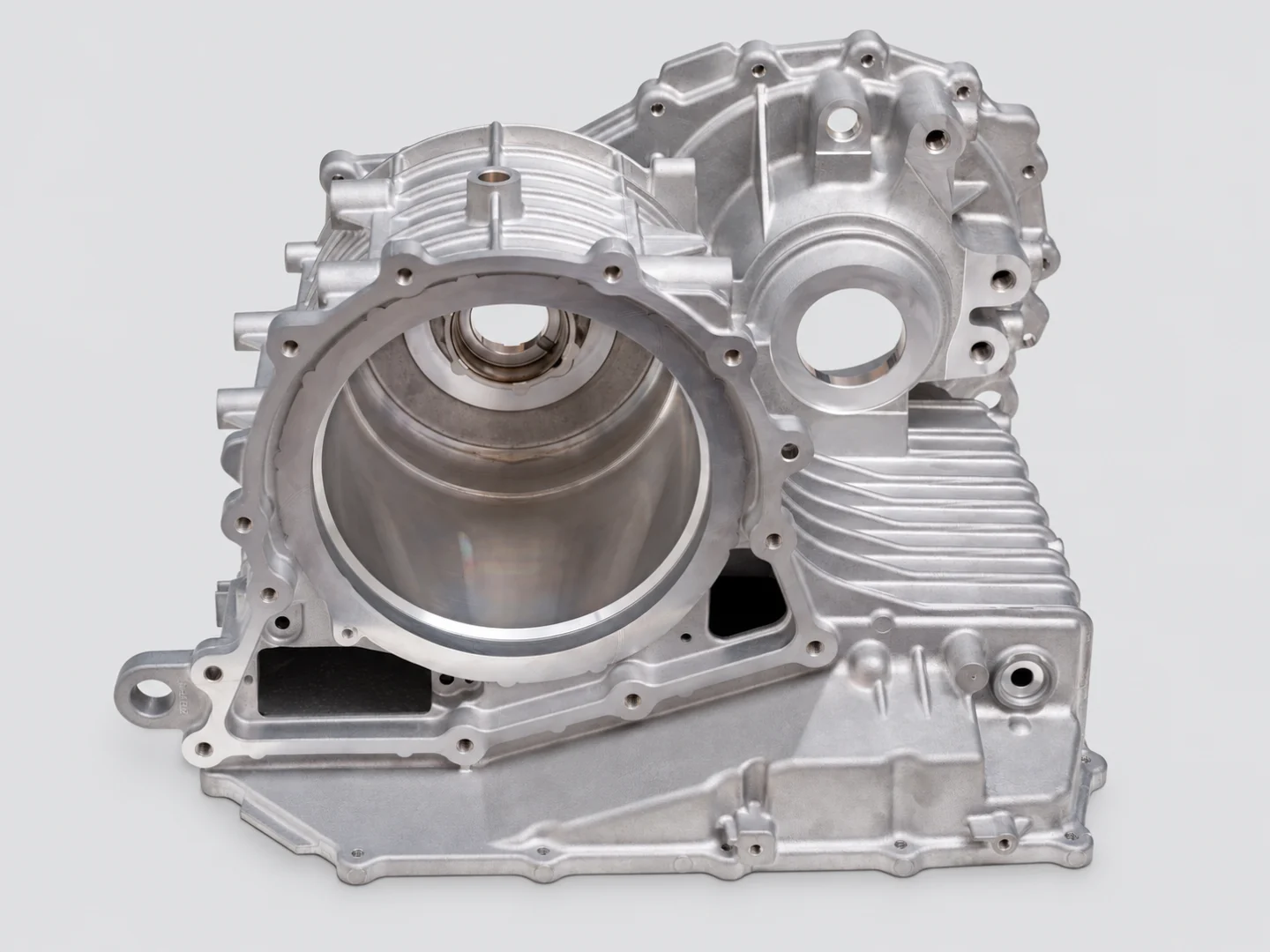
ZAODA component photograph showing interfaces considered during an alloy and manufacturing review. The supplied grade is established by its material records.
Choose Zamak 3 or Zamak 5 for the actual downstream operation
Zamak 3 is a general-purpose zinc die casting grade with a useful balance of castability and forming behavior. Zamak 5 contains more copper and is generally stronger and harder, with reduced ductility relative to Zamak 3. That tradeoff matters when a part will be riveted, swaged, crimped or otherwise formed after casting.
For a connector, latch or fastening component, include the forming operation, assembly loads and any repeated service loads in the material review. If the part carries a sustained load, temperature and time are also relevant. For a visible plated part, assess the alloy, surface preparation and finish acceptance together. The International Zinc Association's selection guidance discusses the grade-dependent forming and service considerations.
When comparing published strength or elongation values, retain the source, casting route, specimen basis and test conditions. A supplier's typical-property table supports selection; finished-part acceptance needs its own agreed requirements. See zinc die casting for the related process and design review.
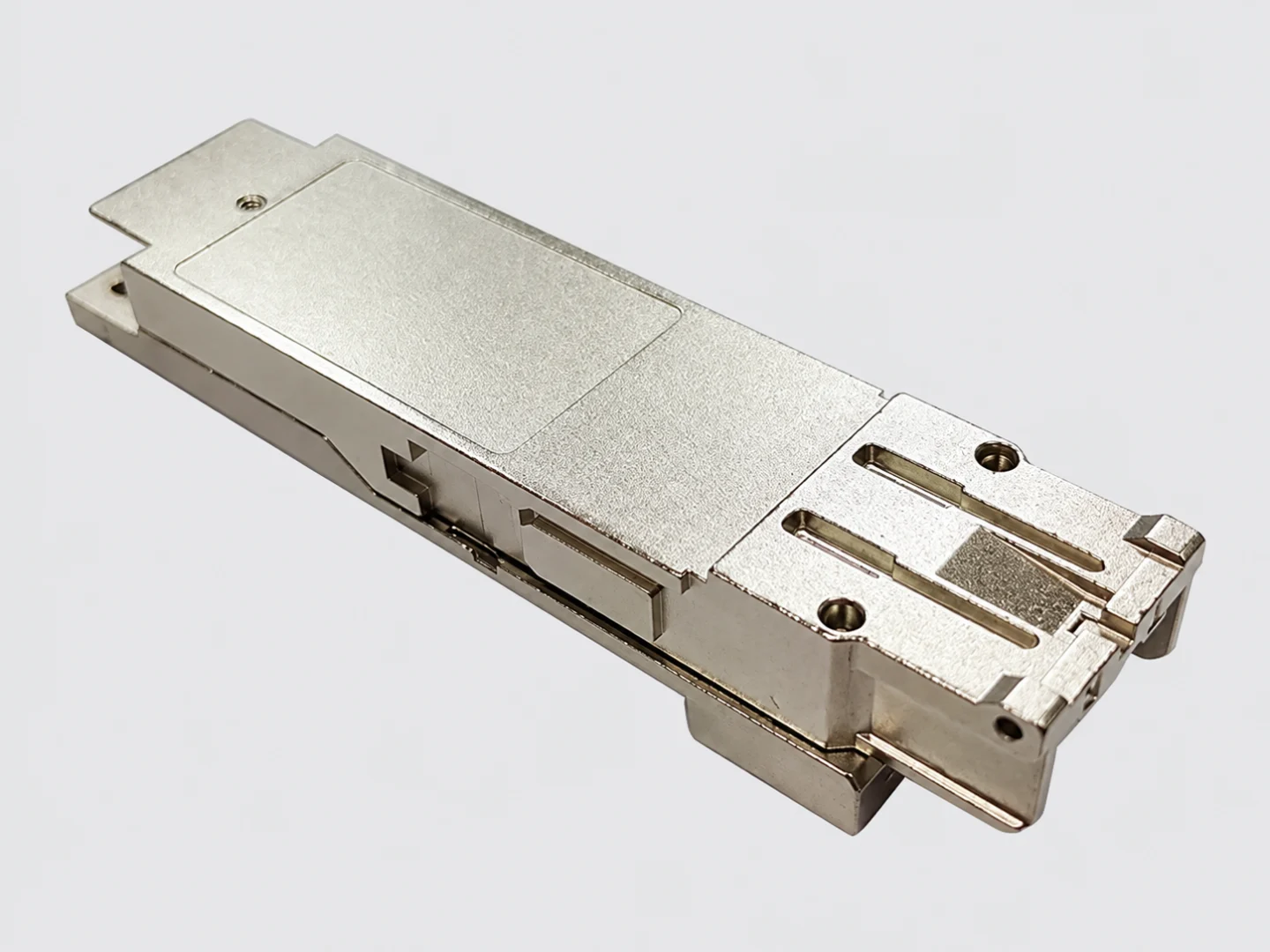
ZAODA zinc component photograph. Zamak grade, condition and acceptance requirements are specified for each project.
Separate incoming alloy evidence from finished-part acceptance
First identify what a standard or certificate covers. For example, ASTM B240 addresses zinc and zinc-aluminum alloys in ingot form, while ASTM B86 addresses the cast product. The ASTM standard scope makes that distinction explicit. Incoming material evidence and the final casting requirements answer related but different questions.
The material definition should identify:
- Identity: the complete grade, governing standard, edition and any customer-specific restrictions.
- Condition: the required delivered state and subsequent operations that can affect the accepted properties or surface.
- Records: which material analysis, batch identification, casting records or test reports are required and how they relate to the delivered parts.
- Acceptance: any ordered chemistry, mechanical, dimensional, surface or functional checks, including the test method and specimen or part location.
A chemistry report does not by itself establish dimensional fit, porosity, coating adhesion or leak performance. Put those requirements into the relevant manufacturing and inspection plan. Our quality page describes drawing requirements and acceptance documentation.
Review the grade with machining, finishing and service conditions
Material selection continues after the die is filled. Machining can expose internal regions of a casting, and finishing adds its own surface preparation, masking and appearance requirements. Specify the functional interfaces and final surface condition so they remain visible in the quotation and process plan.
| Part requirement | Information to provide | Evidence to agree |
|---|---|---|
| Precision bore or thread | Final geometry, datum relationship and tolerances | Dimensional and thread inspection after the specified operations |
| Sealing interface | Machined boundary, test medium, pressure and allowed leakage | The defined component or assembly test at the agreed production stage |
| Thermal contact | Actual alloy assumptions, contact face and operating conditions | Material documentation, interface checks and the agreed equipment evaluation |
| Plated or coated surface | Treatment, visible zones, appearance reference and masking | Finished-surface and any specified adhesion or corrosion checks |
| Formed zinc feature | Operation, forming sequence, geometry and service loads | Validation of the selected grade in the intended secondary operation |
Use secondary CNC machining and surface finishing to define the relevant operations. Assess the completed component requirements alongside the alloy data.
Example: the drawing says A380 and the RFQ says ADC12
Treat the mismatch as an open material decision before tooling or production release. Compare the exact specifications and customer limits, then identify any affected finish, machined interface, thermal assumption or functional test. A supplier cross-reference or a similar-looking sample cannot settle that decision.
Record the accepted grade and any additional limits in the controlled drawing or purchasing documents. If a change is proposed after sample approval, identify the checks and documentation that must be repeated before approving the change. Keep the revised material identity connected to the parts supplied under it.
This approach also applies when Zamak 5 is proposed for a Zamak 3 part that is crimped during assembly: compare the forming requirement as well as the strength data.
What to include in an alloy specification review
Send the controlled drawing, part model, present grade and governing specification, required quantity and intended application. Include finish, machining, forming, sealing or thermal requirements that affect the material choice. Identify the material records and approval evidence needed for samples and repeat supply.
If another grade is being considered, state the reason for the change and the permitted design or process changes. Request a material review with both the original requirement and the proposed alternative so the comparison has a clear basis.
Technical references: NADCA product specification standards, International Zinc Association alloy specifications and Eastern Alloys zinc-grade data. Apply the standard and edition agreed for the project.
